The Future of the Creator Economy: Why Owned Platforms Beat Social Reach in 2026 and Beyond
TL;DR: The creator economy's first decade was won by reach. The second decade will be won by ownership. The creators building durable businesses in 2026 are not the ones with the most followers, they are the ones who converted follower attention into direct subscriber relationships before the algorithmic window closed.
The creator economy has always been defined by platform dependency. YouTube monetization, Instagram reach, Twitter engagement, TikTok virality, every meaningful business outcome for creators in the last decade ran through infrastructure they did not own or control.
That model is now breaking down, and the break is permanent.
What Changed in the Creator Economy, and Why Won't It Reverse?
Three structural forces are reshaping the creator economy simultaneously:
- Algorithm saturation: Every major platform has reached the point where organic reach is declining as a function of content volume. The algorithm that once amplified new creators now primarily amplifies established ones. The window for building a meaningful business through organic social growth is narrowing for most niches.
- Platform monetization capture: Social platforms are increasingly competing directly with creators for the ad revenue that used to flow to creator audiences. YouTube Shorts, Instagram Reels, TikTok Creator Fund, these are not generous programs. They are retention mechanisms that pay creators far less per impression than their own subscription products would.
- Subscriber LTV economics: The economics of direct subscriber relationships at even modest scale now vastly outperform the economics of social media monetization. A creator with 5,000 paying subscribers at $10/month generates more revenue than a creator with 500,000 followers monetized through platform ad revenue. The math has shifted.
What Is the Ownership Transition?
The shift from rented to owned audience is not a philosophical choice. It is a business survival calculation that is becoming more urgent with each algorithm update.
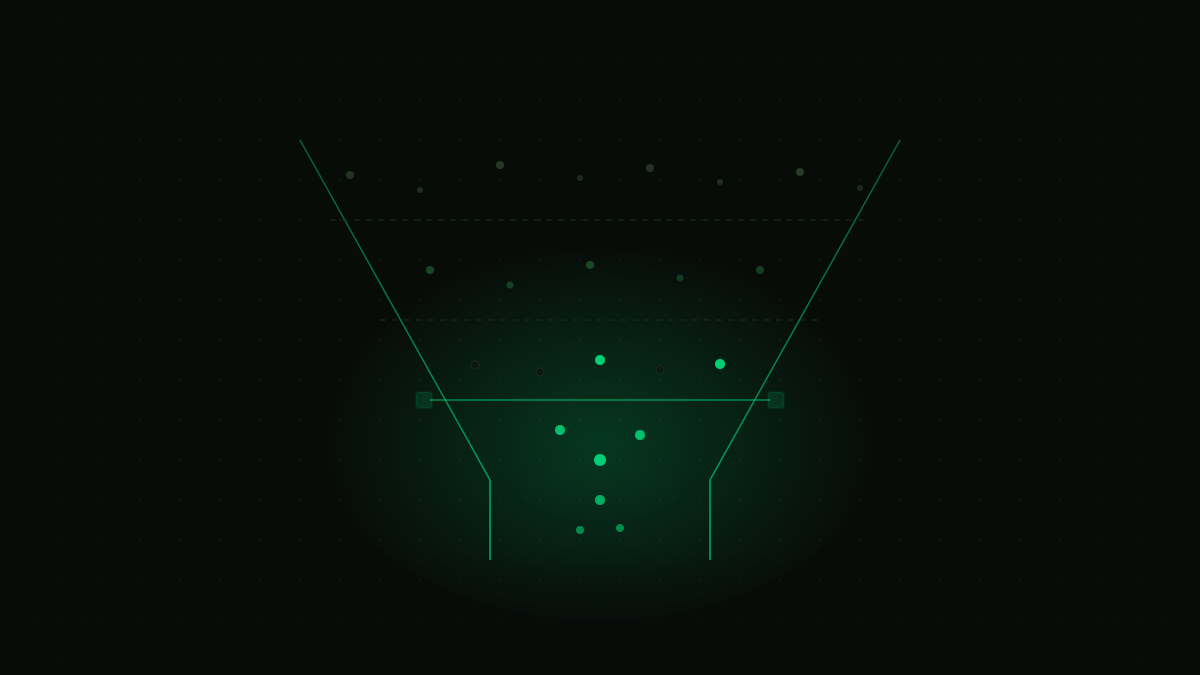
Creators who have made this transition successfully share a common pattern: they used their social reach as a funnel rather than a destination. Social content drove awareness and discovery. The value exchange, the content that actually justified a relationship with the creator, happened on owned infrastructure.
This is not a new model. It is the publishing industry's subscription model, adapted for the creator economy's scale and economics. The newsletter industry figured this out first. Podcast producers figured it out next. Video creators are in the process of figuring it out now.
What Does Creator Ownership Actually Require?
Ownership in the creator economy has a precise definition: you own the relationship if you can reach your most engaged audience tomorrow regardless of what any social platform does tonight.
That means:
- An email list you hold in a format you can export and take anywhere.
- A payment processor relationship where you hold the customer data.
- A platform, however simple, where your best content lives and where your best fans have an account that you manage.
None of this requires building technology. It requires deploying the right infrastructure and making deliberate decisions about where value is delivered and where transactions happen.
What Does the New Creator Business Stack Look Like?
The creator businesses that are structurally sound in 2026 operate with a layered stack:
- Discovery layer (rented): Social platforms, search, podcast directories. Generate awareness and first contact. No revenue capture, no data ownership. That's fine, this is top-of-funnel.
- Relationship layer (owned): Email list, free membership tier, newsletter. This is where fans move from anonymous followers to known contacts. First-party data begins here.
- Revenue layer (owned): Paid membership, premium content, community access, digital products. All transactions on infrastructure you control. All subscriber data yours.
The creators running this stack correctly are building something that compounds. Every subscriber adds to a data asset. Every renewal strengthens a retention model. Every year of data makes the product more personalized and the business more defensible.
Who Wins the Next Decade of the Creator Economy?
The creator economy's next decade will be won by operators, not personalities. The distinction matters: a personality is optimized for attention; an operator is optimized for business outcomes.
Operators build systems. They invest in infrastructure before they need it. They convert attention into relationships before the algorithmic window closes. They build products, not content calendars.
The ceiling for a creator who has built owned infrastructure is determined by the value they create. The ceiling for a creator who has not is determined by an algorithm they do not control.
The choice of which ceiling to live under is still available. For most creators, the window to make it is narrowing.
Frequently asked questions
Why are owned platforms beating social reach in the creator economy?
Three forces converged: organic reach is declining as content volume saturates every algorithm; platforms increasingly capture the ad revenue that once flowed to creators; and direct-subscriber economics now outperform social monetization. A creator with 5,000 paying subscribers at $10 a month can out-earn one with 500,000 followers on platform ad revenue. Reach won the first decade; ownership wins the next.
What does creator "ownership" actually require?
You own the relationship if you can reach your most engaged audience tomorrow regardless of what any social platform does tonight. In practice that means an email list you can export and take anywhere, a payment relationship where you hold the customer data, and a platform, however simple, where your best content lives and your best fans have an account you manage. None of it requires building technology, only deploying the right infrastructure.
Do you have to leave social media to build an owned platform?
No. Social stays the discovery layer (rented): it generates awareness and first contact with no revenue capture. The relationship layer (owned) is your email list and free tier, where followers become known contacts. The revenue layer (owned) is paid membership, premium content, and products, transacted on infrastructure you control. Social drives the funnel; the owned platform is the business.
Newsletter
Get insights in your inbox.
Related Articles